
Text by Beatrix Joyce on Tanzfabrik’s 2026 Programme “RESIST!”.
– August 2026.
What will we do when we have no money?
Oh true lovers what will we do then?
Only hawk through the town for a hungry crown
And we’ll yodel it over again
– Lankum , Between the Earth & Sky (2017)
As a response to the current (and ongoing) crises in the dance field and the cuts in cultural funding, the production house Tanzfabrik Berlin came up with a counter-initiative: for 2,5 months they handed their studios over to artists as part of the residency programme “RESIST”. The programme included weekly, public assemblies with invited guests and a final event with 15-min performances. The artists, with whom they had long-standing collaborations, were offered access to their studios and minor technical support, without the usual production pressure. It was up to them in which way they used their available resources and how they participated. It was a generous gesture that was embraced with great enthusiasm by the artists.
So, I wondered: how did the invited artists use their studio time? What kind of work followed from this initiation? I spoke to three of the artists, Tatiana Mejia, Sergiu Matis and Thiago Rosa about what this opportunity meant for them. Each of them found themselves at different phases in their personal and professional lives, which naturally filtered into their studio time.
What will we do when we have no money?
RESIST: through insisting together
Tatiana Mejia
Dominican choreographer Tatiana Mejia was very grateful to have received this generous invitation from Tanzfabrik. She emphasised the sense of freedom she felt during her residency; the freedom to be in the space, to reflect and to come together. And the joy of working within community energy, from the gathering of the free scene during the assemblies to exchanging with the other artists when they crossed paths.
Tatiana took the opportunity to invite her collaborators to join her in the studio, to work on a few ideas and scores they already had. It was a joint research with the opportunity to show a short sketch at the “Voices of Resistance” closing event – where she presented excerpts inspired by sculptures and monuments from the Black resistance movements. It felt organic and easy-going, with everything from scheduling to practising together running smoothly.
Tatiana’s work centres around Afro-diasporic dance practices, cultures and music. She takes the constant colonial narrative from her upbringing as the impulse to work with untold stories, suppressed voices and dances of resistance. Across Latin America protest and resistance is often practised in a performative way. The topic “Resist” therefore naturally resonated with her.
The residency took her back to how she used to work in the past when she didn’t yet have access to funding or opportunities. In those times she would start by informally inviting people to join her. The framework helped her to think more openly about how performance can be made in a more spontaneous, sustainable way. It took her back to the basics of how to work together with collaborators. And yet she questioned – how can it still be substantial? How can you put yourself out there and continue showing your work in a dignified way?
Regarding the future, Tatiana had a grounded approach. “Everybody has their own struggles, it’s difficult to find togetherness when we are all in the hustle. I think it is still possible for things to evolve and continue rolling. I will find ways to keep on going and to put myself out there. Many artists are still like this; it will not die! It will evolve. I am curious about this evolution. From these crises new forms are born. However, in my experience of Berlin, things take time. Things that need to change cook slowly and take time.”
What will we do when we have no money?
RESIST: through practising aesthetics of difference
Sergiu Matis
When Sergiu Matis – originally from Romania – was offered the “RESIST” residency, he had just lost his father. At this hard moment in his personal life, being offered financial support and studio time was a welcome gift.
After having spent time with his family and having taught young dance makers in his hometown, he entered the studio with his sound collaborator AGF – Antye Greie. As part of his upcoming project “ocean-bound”, they worked on a longing for the ocean through sound recordings and experimenting with waves. He danced while she live-edited, searching for the sound of the ocean. Meanwhile he was haunted by memories and images of his father, mired in the complexity of grief. It was not possible to escape it.
“It has a personal dimension, when the work also incorporates grief. Even if you make work that is ‘not personal’, there is so much of the parental relationship present – it becomes a frame through which you see the world, even if you try to escape it or go against it.” Sergiu shared. He was on a personal journey of acknowledging the origins of his artistic interests.
Furthermore, Sergiu is currently preparing a solo work for his hometown. During the residency he wrote a project description for an embodied retrospective. He’s working on the idea that group pieces can be condensed and performed by solely one performer – namely – the author. However, he emphasised it is the financial situation – or rather, the lack of funds – that is the main driving factor behind his creation of solos. In his solo “Nocturne for broken vocal chords” he recycled material from different pieces, in order to ensure the material is still performed. With smaller budgets, these works can remain visible and tour to other parts of Europe and internationally. However, artistically, he isn’t that interested in being alone on stage – he prefers to work with others.
Within his choreographic practice, Sergiu seeks to find a continuum between technology, culture, nature and society. In his precise elaboration of the body, he seeks progressive perspectives, which is in itself a form of resistance. To resist is to insist on specialised vocabularies that attempt to fissure the reality that exists. It is less about escape or transformation, rather, it’s about showing what bodies are also capable of. He seeks to deviate from the status quo by finding forms that express a desire for difference.
Thiago Rosa
What will we do when we have no money?
RESIST: by joining forces
Berlin-based, Brasilian choreographer Thiago Rosa spoke about the freedom he had been afforded by Tanzfabrik during the “RESIST” residency. It was an uncomplicated, unbureaucratic process, which he felt did not demand too much of him or his work. He appreciated the diverse spectrum of artists that had been invited, each at different points in their careers. He also noted how the assemblies allowed him to get to know other associations and connect with and extend his ever-shifting network within the Berlin free scene.
He invited Johanna Ryynänen, his collaborator from his 2024 RED residency at Tanzfabrik, back into the studio. They revisited and re-embodied the work “Urban Foragers” which was started back then. With their renewed rehearsals, the work became more physical than conceptual, allowing it finds its root deeper in their bodies.
“How can we find other ways to resist?” Thiago asked. His reflections on his residency brought him to the understanding that you don’t have to follow a formula, rather, you can create a new one, one that feels right to you. Along this vein, there are many ways of resisting. There are different methods with which we can produce work. When we can shift our thinking about artist labour, and accept other modes of production, we can change the way we produce. This acknowledgement would need to extend into cultural politics.
That said, the conditions of work, especially when working in a group, need to be taken into account. Food, transport, rehearsal fees… These are the basics that need to be considered, so we can work with dignity. Finding ways to accommodate needs, as well as schedules and timings, are also an important part of that.
In regards to the current situation, Thiago feels there is a good vibe between artists. He feels the time of “competing” with one another has been left behind – it makes no sense to compete with someone who is in the same boat as you. The scene feels more cooperative, with artists being more open to listening to each other. It continues to be important for projects and different artistic approaches to coexist horizontally. “How could other spaces join?” He asked. “How can we have more artists in politics? What kind of dialogues could contribute towards educational change? It is important that not only artists become empowered – but also that organisations and institutions join forces. Artists and institutions need to work together.”
All together now.
What will we do when we have no money?
We cannot escape the need for money in the arts. We need money like any other profession. Yet, we also know that what we do can’t be measured in money, or even worse, profit – rather, the impact of our work extends into the wider cultural, social, local, international and personal realms. The immeasurability, the slipperiness of what we do shapes our paths as well as the new interdisciplinary, inter-cultural and international links we make. However, as Tanzfabrik’s “RESIST” programme has shown, perhaps it is through collective dreaming that we can resist the urge to deliver under the current pressures. The answer to no money is resistance by coming together, and as the three artists I spoke to would confirm, by not giving up.
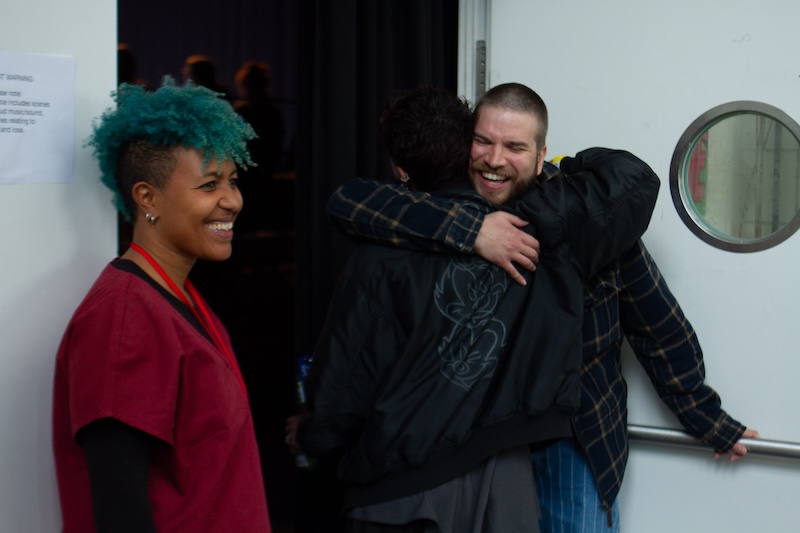
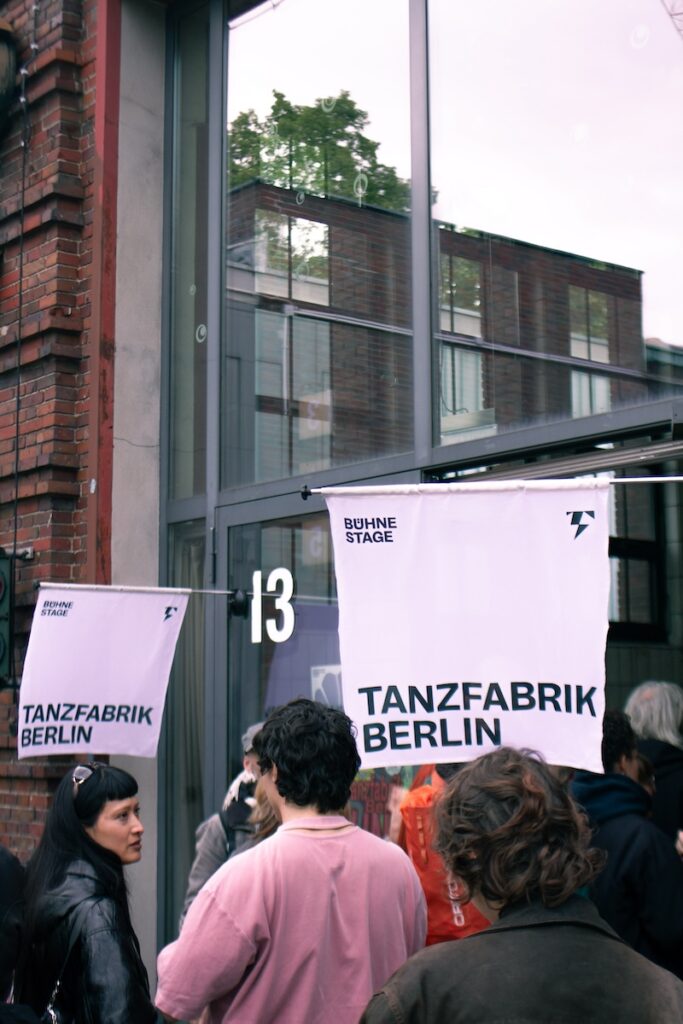
Photo: Samantha Calandrini.
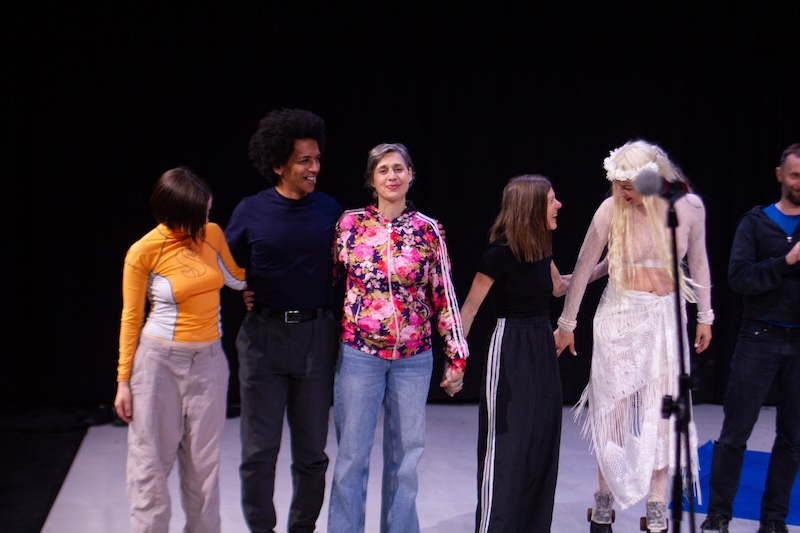
Photo: Samantha Calandrini.
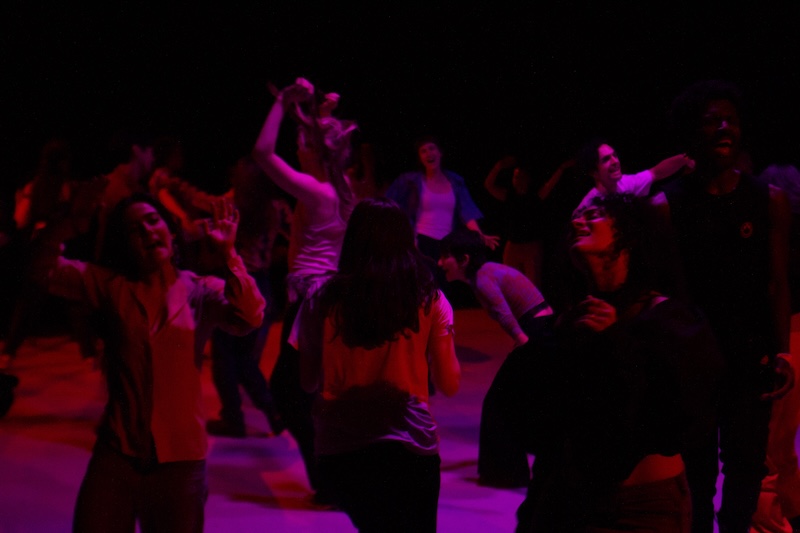
Photo: Samantha Calandrini.
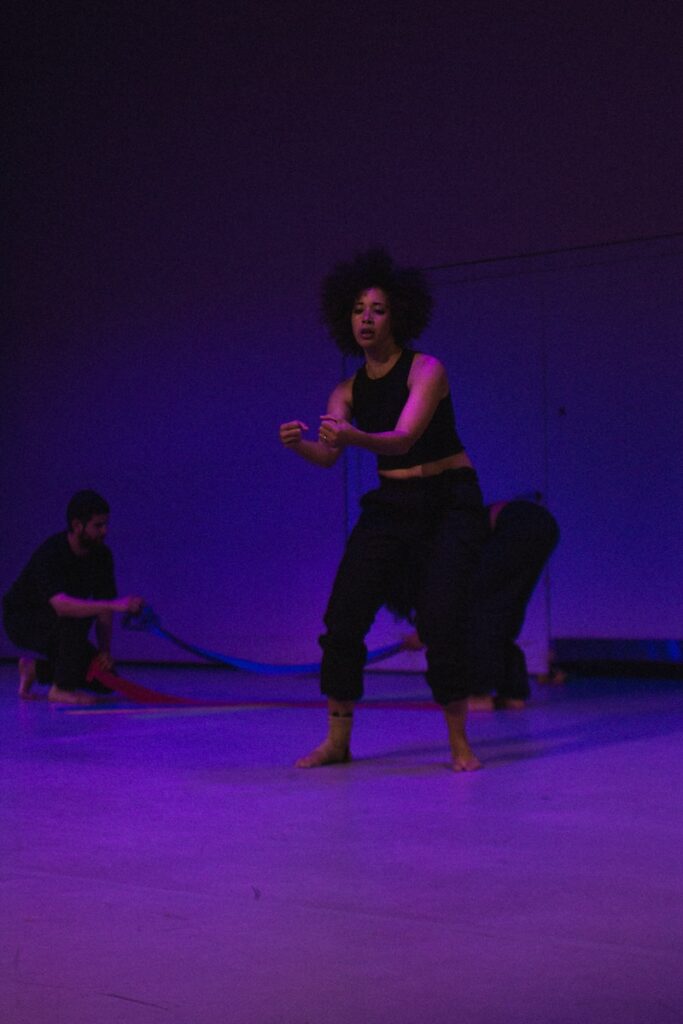
Photo: Samantha Calandrini.