
This text reflects on RESIST!, a project initiated by Tanzfabrik Berlin BÜHNE.
RESIST! supported thirteen independent artists in spring 2026 amid severe cuts to cultural funding. For two and a half months, Tanzfabrik opened its studios as spaces for practice, exchange, and pause – free from the pressure to produce or perform.
The text is part of ‘Memories and Reflections’, a publication of texts written by STREAM authors, commissioned by Tanzfabrik Berlin Bühne.
– August 2026.
It’s May 16, 2026, and I feel like I’m at the prom. The final evening of RESIST!, a spring programme hosted by Tanzfabrik Berlin BÜHNE together with Zeitgenössischer Tanz Berlin (ZTB), brought the dance community together. After four years in Berlin, I feel like a part of it. The evening stands out for me because most days I feel like a lone, exhausted solo entrepreneur.
Before moving to Berlin, I thought of myself as a cultural worker and activist, someone invested in building communities and imagining new infrastructures for art. Since then, I’ve become fluent in a language I never intended to learn: cash flow, business plans, net profit. Somewhere along the way, even the finer points of VAT found their way into my bedroom conversations. As a freelance migrant artist, these are more than administrative concerns. They shape my ability to remain in Germany at all. My right to stay is measured through my ability to earn, pay taxes and contribute to the social security system. At the same time, Germany itself seems increasingly preoccupied with productivity. Politicians insist that people should work more, produce more, contribute more (1).
No wonder I’ve started imagining myself as a tiny capitalist. And I loooove playing at being one. I think I even have some capital: a pair of stage panties with the word BUTT spelt out in rhinestones. My scenographer made them for a performance. Surely that’s an asset. Surely I can extract a little more value from them.
What a funny game for a disillusioned leftist! Somewhere along the way, I stopped asking what kind of art I wanted to make and started asking how experimental dance might become economically viable. Instead of revolutionary heroes, Wile E. Coyote has become my new role model.
Coming to RESIST! felt like someone had finally stopped the endless chase and allowed Wile E. Coyote to look down before falling. Across eight weekly Assemblies curated jointly by Tanzfabrik and Zeitgenössischer Tanz Berlin e.V. (ZTB), an association that has represented the interests of dance practitioners since 2000, participants discussed structural support, networks of solidarity and forms of artistic resistance. But also more everyday questions: how can cultural venues become more accessible to parents? Assemblies approached the crisis from different perspectives. Guests such as Dr Justus Duhnkrack unpacked the political and legal dimensions of Berlin’s cultural cuts, while another evening was dedicated to a screening of a documentary on the protest camp organised by students of the Freie Universität Berlin.
Alongside the Assemblies, thirteen artists received a temporary unconditional basic income, studio access and institutional support. Rather than presenting finished productions, they were invited to share fifteen-minute performances at the closing event.
In one of them, Christina Ciupke came on stage naked, arms covered in blue paint. She said she had recently broken both of her arms during a rehearsal and told a poetic story of the odd period that followed this accident. Imagine not being able to feed yourself, get dressed, open doors, or type on a laptop. Now imagine that this same body is also your workplace. The fragile body. It gets tired, it gets injured, it ages. And yet contemporary dance, like many other forms of labour, is organised around the assumption that the body should remain continuously available. When Christina broke both of her arms, she lost the ability to perform, as well as her income, professional visibility and, temporarily, her place within the field. Her injury exposed a tension between the demands of capitalist production and the realities of the body: the body is treated as a productive tool, yet everything that sustains it – rest, recovery, care, dependence on others – remains invisible. After decades of feminist theory, we still need to explain that feeding yourself, caring for others and recovering from injury are not unfortunate gaps in productivity. They are the conditions that make any productivity possible.
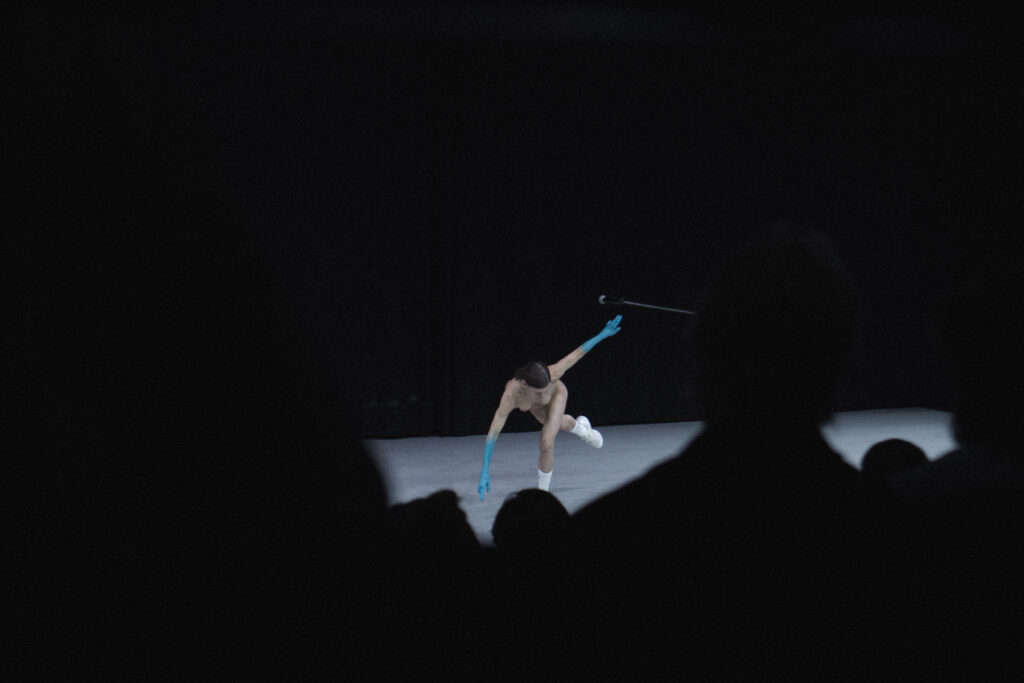
Photo: Samantha Calandrini.
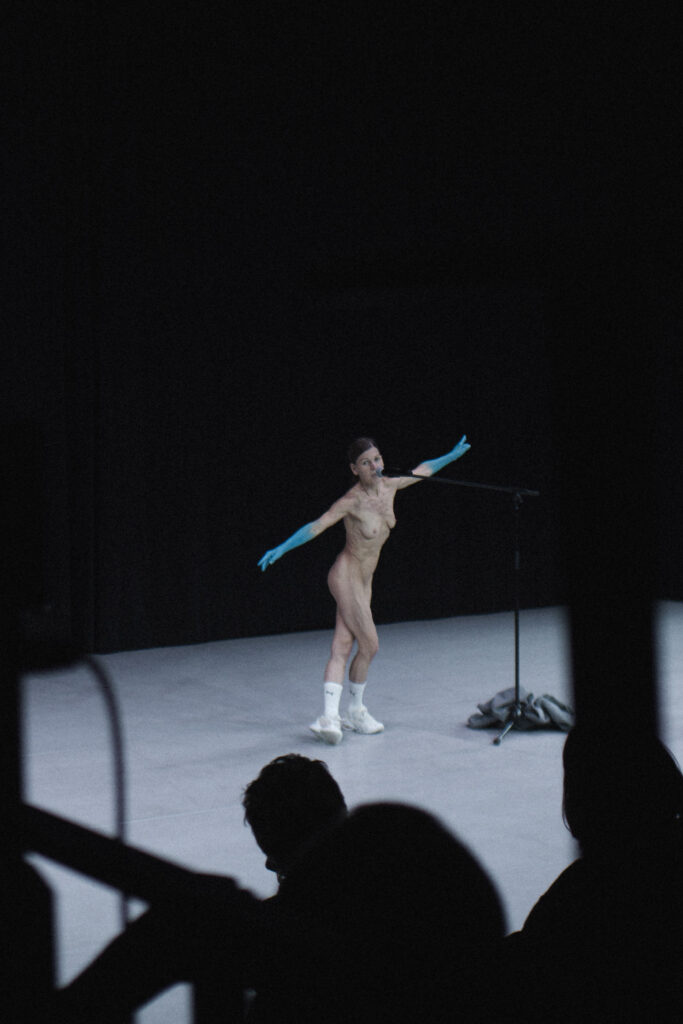
Christina Cipuke.
Photo: Samantha Calandrini.
This is not unique to artists. Much of the work that sustains society, such as care work, parenting, maintaining communities, cannot be accelerated without being damaged. These forms of labour are necessary, but they resist the logic of constant productivity.
Dr Leonie Hunter, in her talk within RESIST! brought this tension into a broader perspective on the relationship between art and capitalism. It focused on artistic autonomy and its potentials and limits in the face of the global ascent of the new right.
Historically, the idea of artistic autonomy has often been connected to the possibility of creating a critical distance from forms of power. For Adorno, for example, the autonomy of art was precisely what allowed it to resist being fully absorbed into the logic of exchange and utility. The lecture pointed to a very different understanding of artistic freedom emerging within parts of the contemporary right and libertarian tech culture. Subversive practices of breaking rules and rejecting established norms historically associated with the avant-garde have been enthusiastically co-opted. But artistic freedom itself was reframed as freedom from society: freedom from responsibility, collective obligations and social consequences.
It is within this framework that tech bros increasingly cast themselves as visionary creators. They call themselves “artistic colonies”; they “build worlds.” They transgress limits, disrupt the status quo and claim a cultural imaginary once associated with the avant-garde. So while I was forced to play the entrepreneur, tech bros joyfully performed the role of artists. What a time to be alive!
When the aesthetics of transgression have been so adopted by the right, perhaps the radical gesture today would be to defend the fragile infrastructures that allow collective life to exist: public institutions, collective organising and care.
RESIST! feels like a small rehearsal of artistic practice as part of the social infrastructure that makes collective life possible. A temporary basic income, collective assemblies, legal advice, discussions on care and parenthood, union organising — none of these is spectacular, yet together they integrate art into a process of life construction (2). Defending the non-productive dimension of art becomes part of the broader politics and language of bodily autonomy: the struggle over who has the right to decide what bodies are for and which forms of life are considered valuable. This question is especially urgent in the context of neofascist politics that seek to discipline bodies through the regulation of fertility, gender and reproduction, reducing them to demographic resources, labour forces or instruments of national survival.
Against this logic, artistic practices that make space for vulnerability, dependency, ambiguity and non-productivity become politically significant. They do not offer an escape from society, but another way of organising life within it.
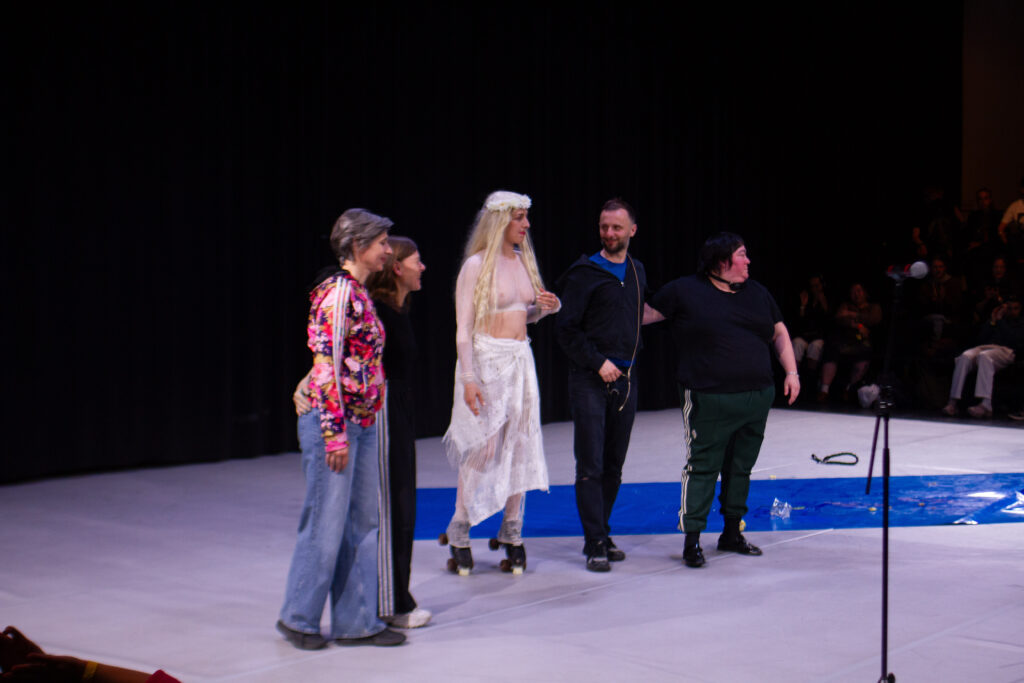
Photo: Samantha Calandrin
(1) See recent text on that https://www.pw-magazine.com/articles/the-promise-of-wocontradictionaccessrk-berlin-s-production-of-precaritthe practice