
Sasha Amaya: Abundant Pastures: Fast Fashion Gen Z Primetime Gladiator in Sasha Amaya’s Solo for Boy
‘Solo for Boy’, Although the title announces the solitary design of the boy’s presence on stage, the performance evokes environs, people and circumstances in relation to him.The Boy himself then is unpeeled through his many avatars in this choreographic inquiry by Sasha Amaya on forms of western, male-bodied, Eurocentric beauty in image-based representation and real-life.
The performance premiered at DOCK11 Berlin from 11 to 14 January 2024.
Parvathi Ramanathan was invited to reflect on the work through this textual response.
“What allows you this kind of ease?” I scribble in my notebook while watching the boy roll and tumble languidly on the floor. Although he and I are engulfed in the dark caverns of DOCK 11 in Berlin, his leisurely tumbles bring alive verdant green pastures. In my mind, I see the gold-
en daffodils that graze against the ankles of this languorous figure. Not a William Wordsworth wandering lonely as a cloud, I am in the 21st century watching ‘Solo for Boy’, a performance choreographed by Sasha Amaya.
Although the title announces the solitary design of the boy’s presence on stage, the performance evokes environs, people and circumstances in relation to him. It is this framing that stitches together Amaya’s inquiry on
forms of white, western, male-bodied, Eurocentric beauty in image-based representation and in real life. Along with the body of the performer Félix Deepen – our Boy – I then read from the otherwise empty stage, flashes of relational conditions. I see Boy in various avatars – Boy and GenZ Gym, Boy and Abundant Pastures, Boy and Fast Fashion, Boy and Coffee shop, Boy and Primetime TV Debate, Boy and Gladiatorial Army – brought alive in the study of the body and further arranged choreographically.
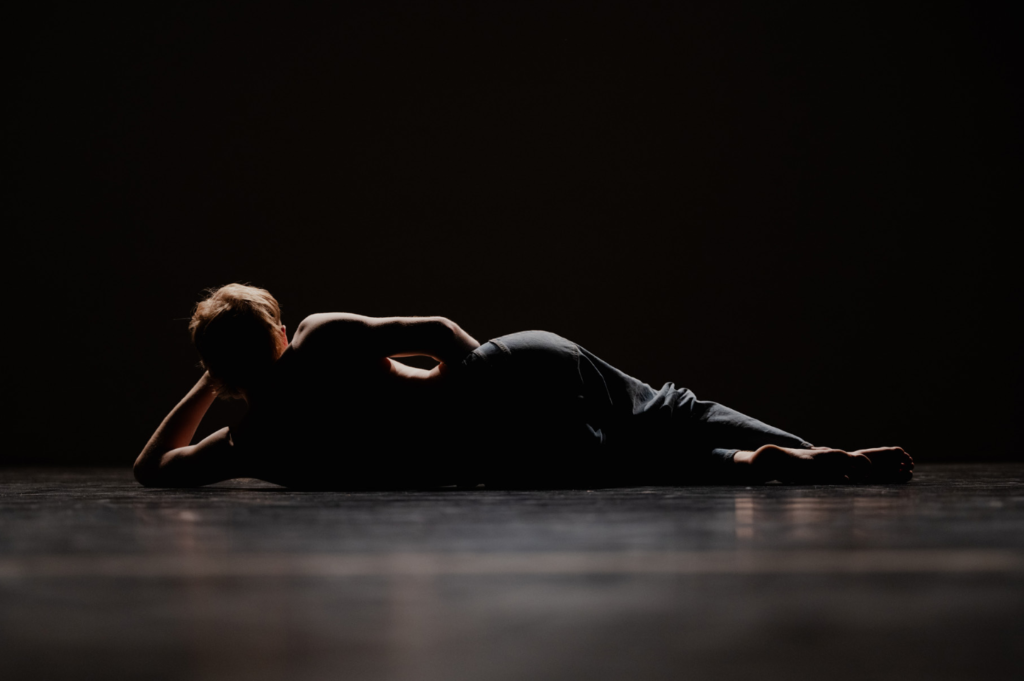
Boy and Abundant Pastures
Boy amid the afore-mentioned abundant green pastures to me presents a reflection of the adolescent boy that is the object of obsession in Thomas Mann’s 1912 book Death in Venice (German original “Der Tod in Venedig”), “… pale, with a sweet reserve, with clustering honey-coloured ringlets, the brow and nose descending in one line, the winning mouth, the expression of pure and godlike serenity.” However, it is not merely the physical appearance that suggests this apparent deific serenity. With the languorous rolling amid imaginary abundant pastures, the boy’s body also evokes conditions of a state of mind. His summersaults and tumbles cuddle close to the earth in familiar oneness. His legs gently bent at the knees indicate well-being and an ease of mind at odds with my own taut shins. The sound of chirping birds and Debussy’s Prélude à l’après-midi d’un faune in the background score raises further mental dialogue with this figure, “Is this music supposed to create an enamoured-ness that I don’t feel?” A peculiar dissonance and envy distances me from Boy. But I continue to observe and find recognition in him. As the boy’s romance with nature unfurls into a Jesus-like sacrificial pose, he strikes me as the archetypal ingénue primed with virtue and innocence.
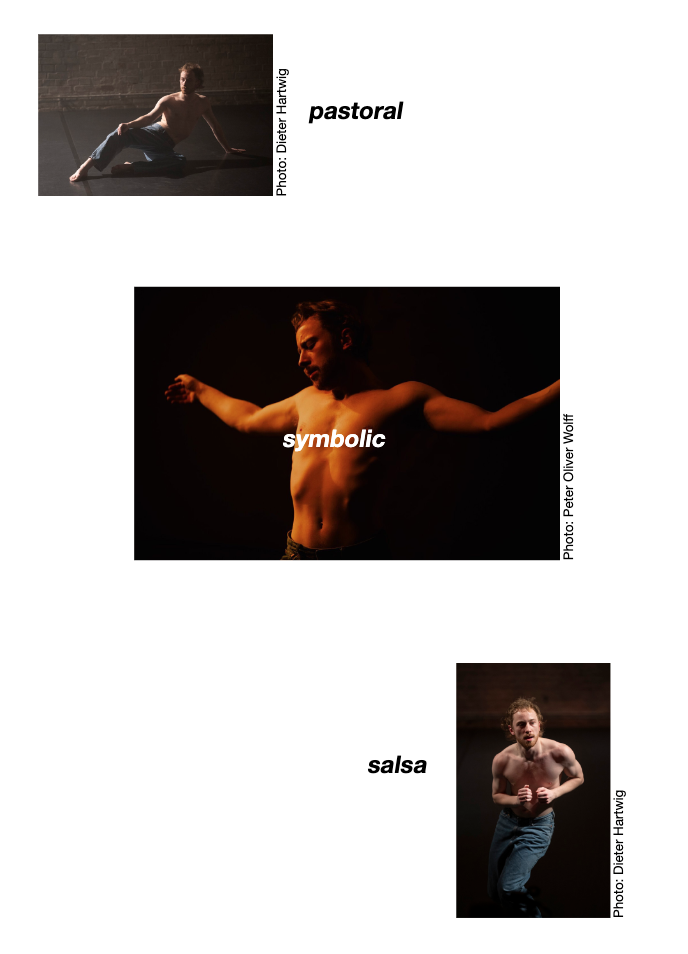
Boy and Fast Fashion and Coffee Shop and Boy
Boy’s fashion parade on the imaginary ramp on stage is electrified with sound design by Alexander Iezzi. His strutting with an upright flamingo posture is bookended by classic poses from fashion magazines. While this version of Boy can be easily shelved away as fast- fashion (which nonetheless is appealing to many), what catches my attention are the Boy in moments of casual interactions such as at a coffee shop. His subtle gestures – eyes momentarily sauntering away before they return to the receiver of the gaze, pupils glinting with a hint of flirtation, the sway of the shoulders, lips pulled into a soft, judicious smile, palms tenderly rubbing, head tilted and then a small nod silently asking ‘whassup’ – are familiar in many ways from popular culture and real life. The body language oozes a charm that is both unaware and self-aware at the same time of its being in operation, of its impact and of its privilege.

I find Amaya’s study of the general habitus of the white, western, male, Euro-centric body to be essential to the performance, particularly in how it is visible in present-day society. Here is also where the tension in the performance lies because of the contradictions it foregrounds. For instance, this kind of a male figure may graze against my idea of beauty or hold them at a high standard. At the same time, I concede that my female body also has tended to use these tentatively flirtatious corporeal gestures, as have urban upper-caste South Asian male individuals from my own context. So perhaps these gestures are not limited to gendered or racial identities, after all? I bring this up in my conversation with Amaya a few days later. “Indeed, these gestures don’t only belong to one sort of person, nor are these
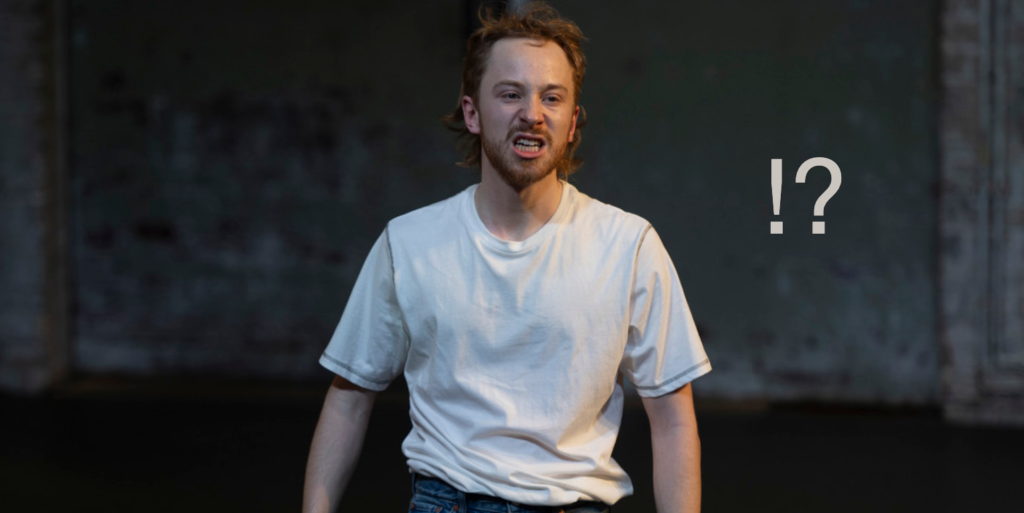
notions of beauty or the behavioural gestures universal” she says. “These may vary depending on our landscape of references. Yet, we may be able to recognize these forms and gestures among friends we respect or in strangers, each time creating degrees of ambiguity and friction. I wanted to bring attention to what attributes society gives position and power to, even though they may not coincide with the subjective taste of many. Though we may see these postures around us all the time, seeing it in a choreographic performance creates a possibility to observe our own gaze and response to them.” Operating on the audience’s gaze, Amaya also herself makes appearances in ‘Solo for Boy’, identically shadowing the Boy’s movements. Whom the audience may choose to look at in this moment on stage (or on the streets or in popular culture) are matters of subtle infinitesimal decisions made unbeknownst to oneself, for reasons usually left unanalysed.
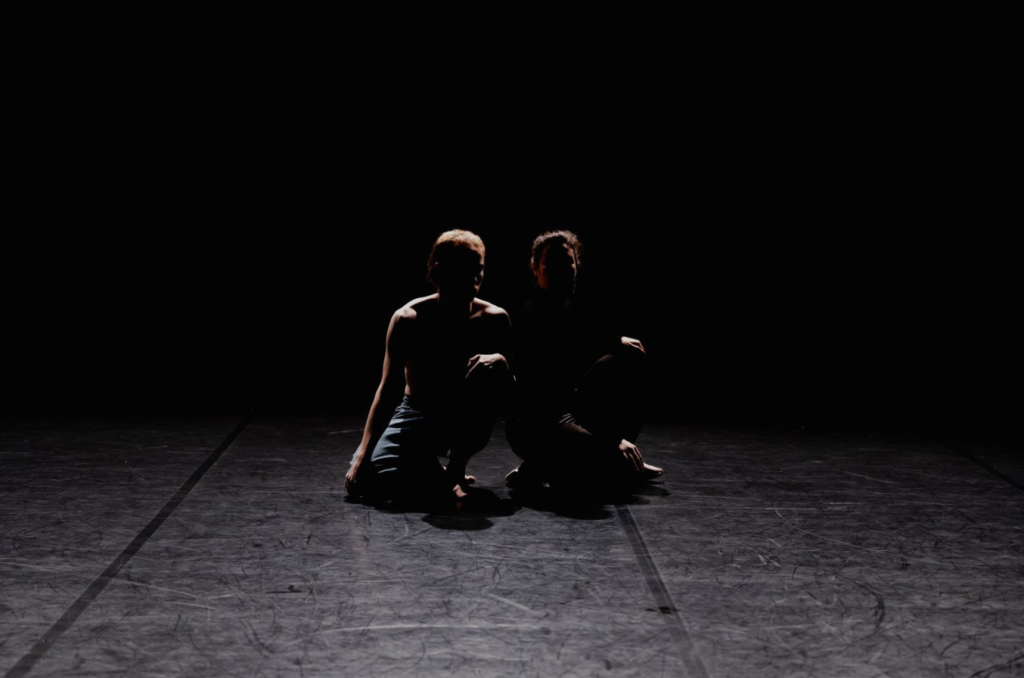

Boy and Primetime TV Debate
The meditation on the movement of Boy is broken when the audience finally hears him speak sitting in a casual confessional body. After a previous episode of violent rage, his monologue simultaneously shaped by Amaya’s live instructions from slightly off-stage, reeks of emptiness. He speaks in twisted metaphors never arriving at a point. As the performance work looks at material and bodies from the 1800s to the present, I now wonder about the space for glitches in the figure of Boy. Not only apologetic self-awareness that is part of the somewhat politically correct modern masculinity, but a vulnerability that is present in everyone who has ever been “the other”. Perhaps we see glimpses of a glitch in some versions of Boy, but the hero-like central protagonist positioning of the figure also keeps them from arriving. Ironically, I find this situation to be more reflective of conditions of the present: even on the theme of self-effacing masculinity, male voices often continue to centre themselves, as does society’s attention on them.
I understand from speaking with Amaya that this is a conscious choice she also made in the casting process. “The casting of such an athletic, ‘’able’’, racialized-as-white, male-read body – other than, say, only my own body performing the same work – also forced me to artistically challenge myself.
By not making an obviously radical, cynical, or subversive declaration at
the outset of the work, we had to do this through the choreography and
dramaturgy itself. Facing the reality of this body and the constructs we
place upon it made the process more delicate, reflective, and nuanced, as well as difficult, for the constructs around the type of form we are critically interrogating also belong to a real person, of course. This friction in confronting the real, the performative, and their ambiguities makes it a challenge both for creator and observer.’’
While ‘Solo for Boy’ is critically crafted on a very specific Eurocentric gaze and aesthetic tended to in the global north (one that hasn’t permeated further widely despite colonisation and globalisation) that the artist experienced in its fullness upon coming to Europe, it throws up an array of images and habitus associations for me in my context. As a brown person from the global south who is now living in Europe, the performance also draws my attention to my dissonance or resonance with the images and
aesthetics in circulation here. A nuanced culling out of underlying reasons for these resonances and dissonances, however, may be the work of a lifetime.